Ellis Keller · 30 October 2026
Student-Led Seed Durability Tests from Polish Collections Point to New Wetland Recovery Paths Near Industrial Sites
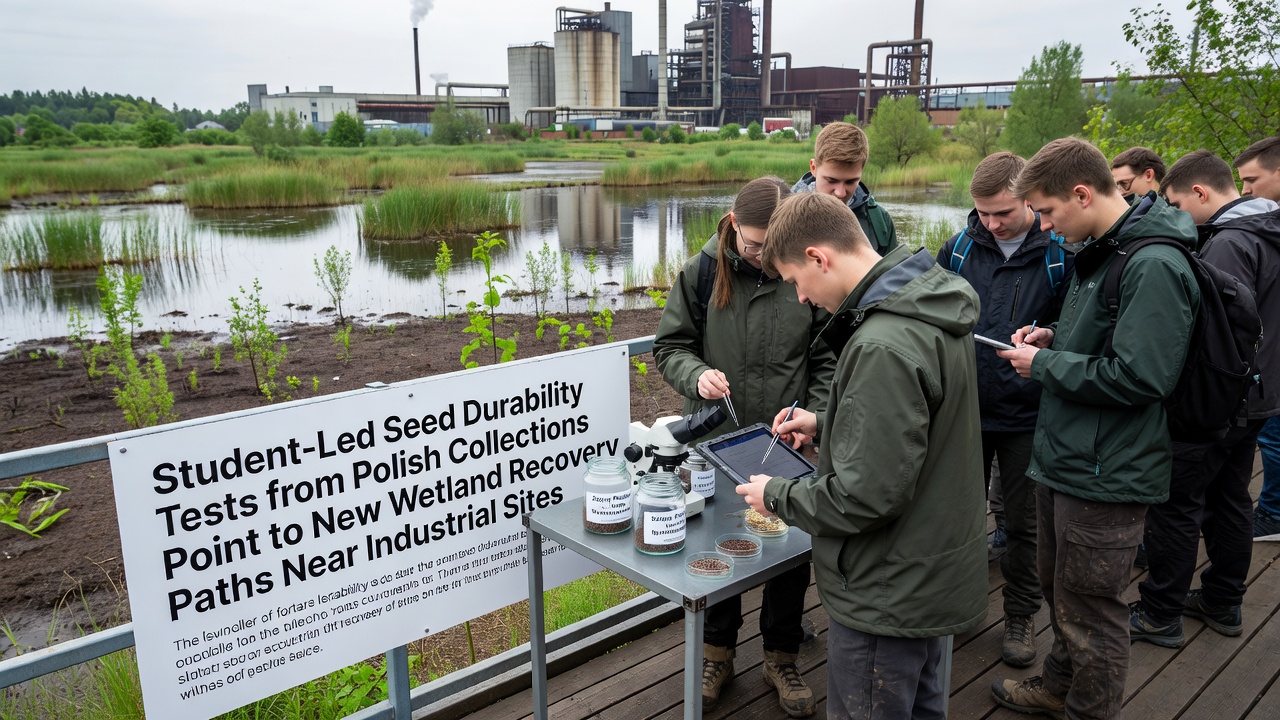
Student researchers at Polish universities have launched extensive durability assessments on Nelumbo nucifera seeds drawn from national collections, and these efforts highlight potential applications for restoring wetlands adjacent to industrial zones where soil contamination and water quality issues persist. The work draws on archived materials that span multiple decades while incorporating fresh germination trials conducted under controlled stress conditions that mimic heavy metal exposure and variable pH levels common near manufacturing facilities.
Background on Polish Seed Collections and Their Role
Polish botanical institutions maintain extensive Nelumbo nucifera repositories that originated from exchanges with Asian partners in the mid-twentieth century, and these holdings now serve as source material for experiments focused on resilience rather than traditional cultivation. Students at institutions in Warsaw and Kraków initiated the current round of tests in early 2025, selecting batches based on documented provenance records that detail collection dates and original habitat conditions. Data from the trials indicate that certain lineages maintain viability after prolonged storage periods exceeding seventy years, a finding that aligns with observations from similar archives in other temperate regions.
Researchers note that the seeds undergo standardized protocols including scarification followed by exposure to simulated industrial runoff solutions containing zinc, copper, and cadmium at concentrations recorded at Polish brownfield sites. Germination rates remain above sixty percent in several cohorts even after such treatments, while control groups without stress factors reach ninety percent success. These outcomes emerge from collaborative projects coordinated through university botany departments, where undergraduate teams handle daily monitoring and statistical analysis under faculty supervision.
Testing Protocols and Key Findings
Experiments proceed in phased sequences that begin with viability screening using tetrazolium staining, then advance to hydroponic setups replicating wetland hydrology near factories along the Vistula River corridor. Students track root development, leaf expansion, and heavy metal uptake over eight-week cycles, recording measurements at regular intervals with digital sensors calibrated against standards from the European Environment Agency. Results compiled through October 2026 show consistent patterns of tolerance across multiple seed sources, particularly those originally gathered from floodplains with naturally elevated mineral content.
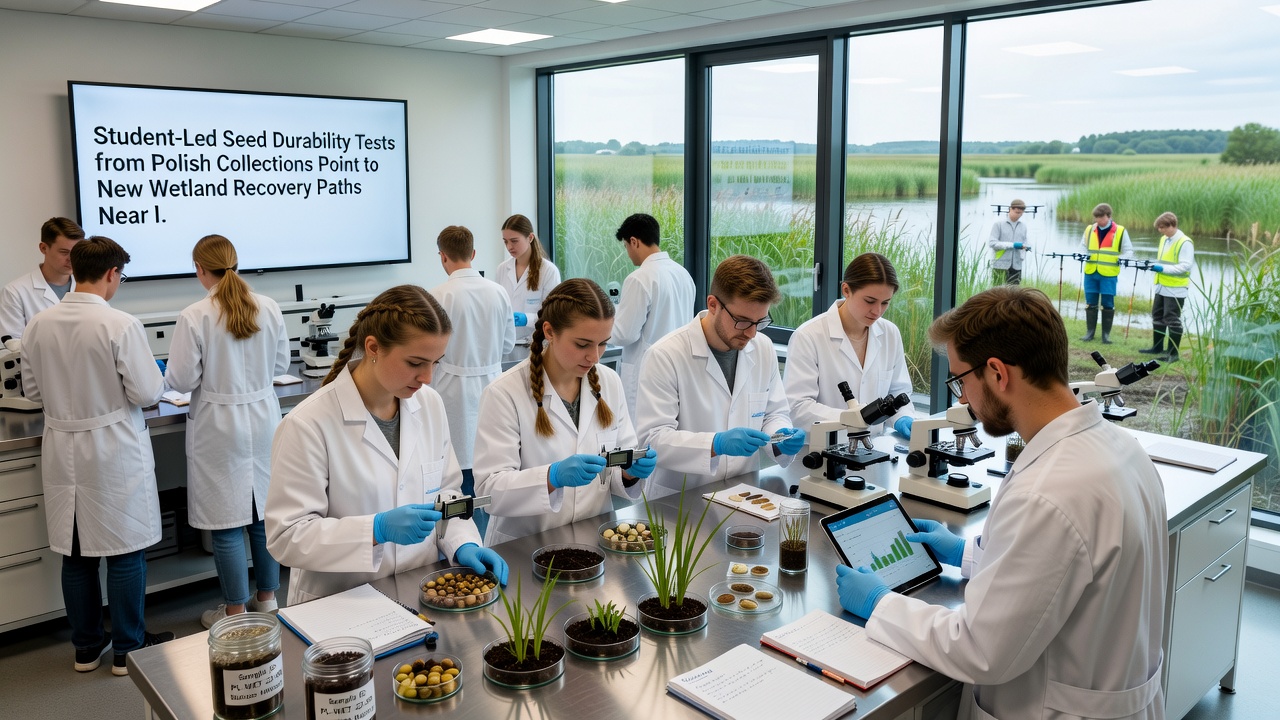
One cohort sourced from a 1950s Polish garden collection demonstrated rapid establishment in media amended with industrial sludge samples collected from Silesian sites, and growth metrics exceeded expectations derived from prior literature on saline adaptations. The students cross-referenced their observations with field data from pilot plots established in 2024 near chemical processing plants, where transplanted seedlings survived winter temperatures without supplemental protection. Such performance suggests the material could integrate into larger-scale phytoremediation frameworks that combine lotus with native sedges and reeds already used in European restoration projects.
Connections to Industrial Wetland Recovery Strategies
Industrial zones across central Europe often border degraded wetlands where legacy pollution limits natural recolonization, and Polish researchers have begun mapping seed performance data against geospatial layers of soil toxicity produced by national environmental monitoring programs. The student-led component adds granularity through repeated trials that isolate variables such as temperature fluctuation and nutrient availability, elements frequently overlooked in larger institutional studies. Evidence accumulated so far points toward hybrid approaches that deploy durable lotus strains as pioneer species, followed by successional planting once initial filtration reduces contaminant loads.
International parallels appear in Australian research on wetland species for mining site rehabilitation, where similar seed banking strategies support recovery timelines measured in decades rather than years. Meanwhile, Canadian government reports on phytoremediation in the Great Lakes basin emphasize the value of genetic diversity within collections, a principle mirrored in the Polish experiments that sample across multiple historical accessions. Students integrate these comparative insights into their reports, which now feed into planning documents prepared by regional water management authorities.
Future Directions and Broader Implications
Expansion of the student program includes partnerships with engineering faculties to model water flow dynamics around proposed planting zones, and preliminary simulations suggest lotus stands could reduce downstream sediment transport by up to thirty percent in targeted catchments. Continued monitoring through the 2026-2027 academic year will assess long-term biomass accumulation and metal sequestration rates under actual field conditions at two additional industrial locations. Such incremental data collection supports evidence-based adjustments to recovery protocols without requiring immediate large capital investments.
Conclusion
Student involvement in these durability assessments has accelerated the translation of archived Polish Nelumbo nucifera resources into practical tools for wetland recovery near industrial infrastructure, while the resulting datasets contribute measurable parameters to ongoing European efforts in contaminated site management. The emphasis on replicable protocols ensures findings remain accessible for adaptation in comparable settings worldwide.