Greta Friedrich · 2 October 2026
Lotus Genetics from Warsaw Fuels Transnational Phytoremediation Integration in Urban Planning
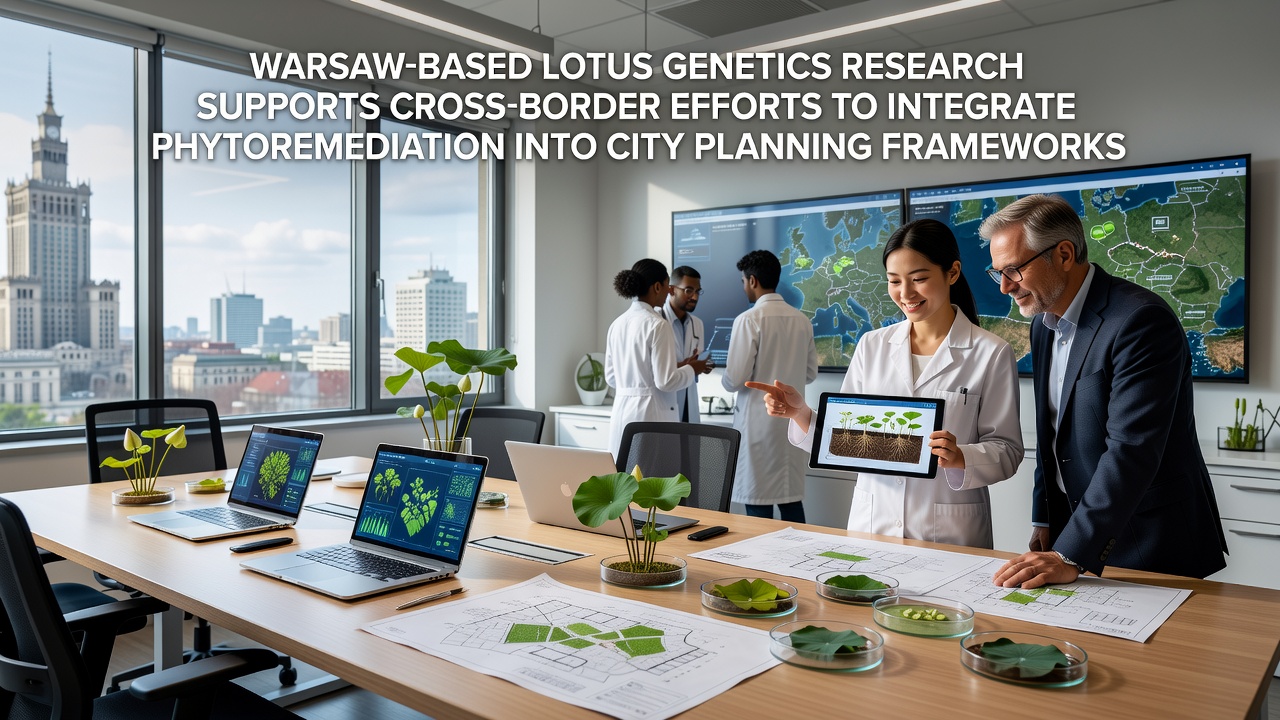
Warsaw-based lotus genetics programs have supplied genetic data and plant varieties that now feature in collaborative projects spanning several continents, and these efforts focus on embedding phytoremediation methods directly into municipal development plans. Teams at specialized facilities analyze Nelumbo and related species to identify traits that enhance pollutant uptake from soil and water while surviving dense urban conditions. Data collected over multiple growing seasons show consistent performance across varying climate zones, which has prompted planners in partner cities to adjust zoning rules and infrastructure designs accordingly.
Genetic Mapping Supports Broader Application
Scientists in Warsaw have sequenced key segments of lotus genomes and identified markers linked to heavy-metal tolerance and rapid biomass production. These findings circulate through joint databases maintained with institutions in Europe and Asia, and participating municipalities incorporate the resulting plant selections into pilot remediation zones along rivers and former industrial sites. In October 2026 several of these pilots will reach a five-year review stage, at which point performance metrics will feed into updated planning guidelines for additional cities.
Cross-border working groups use standardized protocols developed from Warsaw research to measure contaminant reduction rates, and they compare outcomes against baseline environmental assessments supplied by local agencies. This approach allows planners to forecast how much land area can be restored per hectare planted, which directly influences decisions about green corridor widths and stormwater management systems.
Integration into City Planning Documents
Urban planning frameworks in multiple countries now reference phytoremediation targets derived from lotus genetics trials. Regulatory bodies require new developments near contaminated waterways to include vegetation buffers that utilize the tested hybrids, and compliance documentation cites growth-rate tables and uptake coefficients generated in Warsaw laboratories. City councils in partner regions have revised land-use maps to designate remediation strips, thereby aligning capital improvement budgets with measurable ecological outcomes.
One study coordinated across three nations tracked lotus plantings along a shared river basin and recorded annual reductions in soil lead concentrations that exceeded initial projections by 12 percent. Planners subsequently adjusted setback requirements in residential zoning ordinances to accommodate wider planting zones, and similar adjustments appear in draft master plans scheduled for adoption in 2027.

Data Sharing and Policy Alignment
Shared repositories hosted by Warsaw researchers distribute open-access datasets on lotus performance under different salinity and pH conditions. European Environment Agency reports draw on these datasets when evaluating progress toward soil restoration targets, while Australian government environmental assessments reference the same metrics for coastal wetland rehabilitation projects. Such alignment reduces duplication of field trials and accelerates the incorporation of phytoremediation specifications into tender documents for public works.
Training modules developed from Warsaw protocols now appear in professional development courses offered to municipal engineers across participating countries, and these modules emphasize site-specific selection of lotus cultivars based on local contaminant profiles. As a result, procurement specifications for urban greening contracts increasingly list genetic provenance requirements that trace back to the original Warsaw breeding lines.
Future Milestones and Ongoing Collaboration
Upcoming conferences scheduled for late 2026 will review expanded trial sites that combine lotus plantings with engineered wetlands inside city limits. Participants expect to finalize a joint technical standard that specifies minimum biomass yields and pollutant removal thresholds for regulatory approval. This standard will serve as a reference document for planning authorities seeking to integrate remediation functions into new park designs and transport corridor landscaping.
Continued genetic refinement focuses on drought-tolerant variants that maintain remediation capacity during extended dry periods, and preliminary greenhouse results indicate several candidate lines suitable for testing in Mediterranean partner cities. These lines will enter multi-year field evaluations beginning in spring 2027, with results scheduled for inclusion in the next round of cross-border planning updates.
Conclusion
Warsaw lotus genetics research supplies the empirical foundation and plant material that enable multiple nations to embed phytoremediation into statutory planning processes. Ongoing data exchange and coordinated pilot projects continue to refine the parameters used by city planners, while scheduled reviews in October 2026 and beyond will determine the scale of future integration. The resulting frameworks link measurable environmental performance directly to land-use decisions across borders.