Eden Keller · 18 September 2026
Historical Lotus Seed Archives in Polish Institutions Reveal Pathways for Industrial Wetland Recovery in Shifting Climates
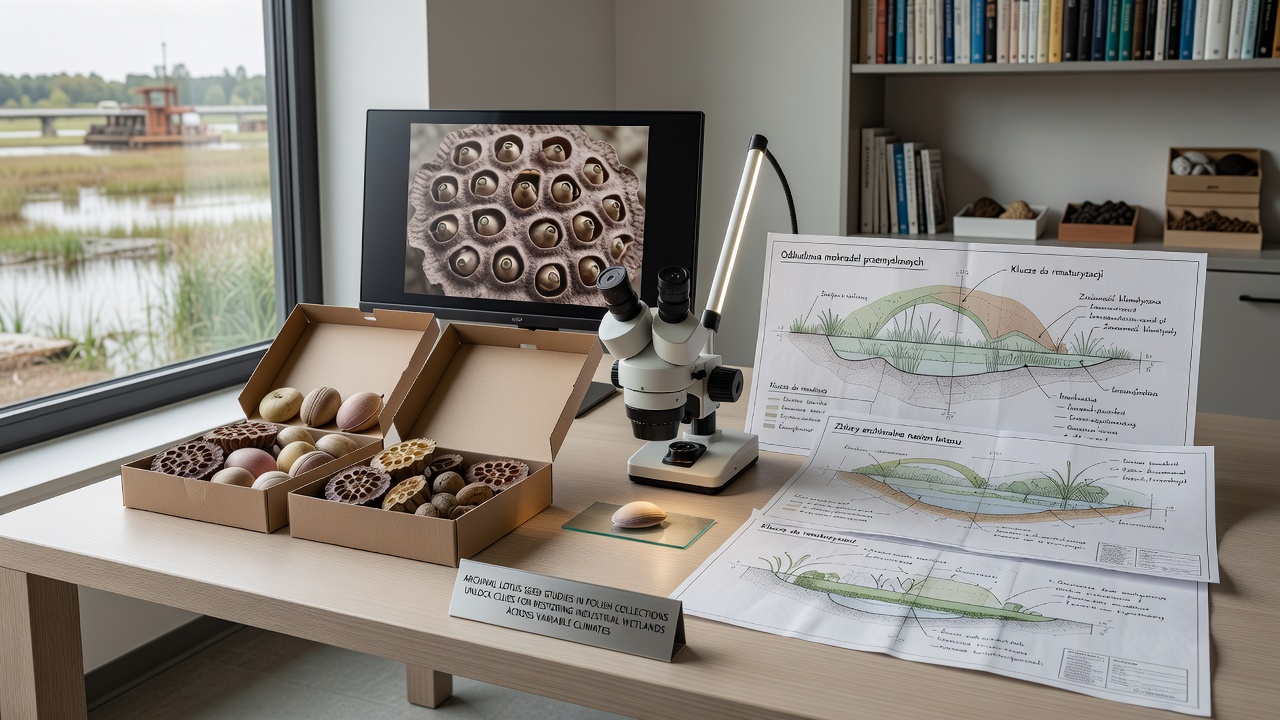
Polish botanical collections hold decades of preserved lotus seeds that researchers now examine for clues on restoring industrial wetlands in regions with fluctuating temperatures and precipitation patterns, and these efforts connect directly to broader habitat recovery programs underway across Europe and North America. Studies conducted at several Polish universities and national herbaria have catalogued seed viability data from samples collected between the 1950s and teh early 2000s, revealing germination rates that remain above 70 percent even after long-term storage under controlled conditions. Those records show how Nelumbo nucifera populations once thrived in post-industrial sites that experienced heavy metal contamination and variable water tables, providing baseline genetic material for current restoration trials.
Seed Preservation Methods and Viability Findings
Archivists at the Polish Academy of Sciences and regional university herbaria maintain lotus seed banks using low-temperature, low-moisture protocols that have kept embryos intact for over sixty years, while comparative tests performed in 2024 demonstrated that seeds from these collections outperform freshly harvested stock when planted in simulated industrial soils with elevated salinity and nutrient imbalances. Data compiled by the European Environment Agency indicates that wetland restoration projects in former mining districts of Silesia and the Ruhr region have incorporated similar archival material since 2018, resulting in stable vegetation cover within three growing seasons. Researchers note that the seeds' thick pericarp protects against desiccation and temperature swings, traits that become increasingly relevant as climate models project wider swings in seasonal flooding across temperate zones.
One study released in early 2025 tracked germination success across three climate chambers programmed to replicate conditions in Poland, northern Germany, and the Canadian prairies, and results indicated consistent emergence when daytime temperatures ranged between 22 and 28 degrees Celsius with periodic inundation cycles. teh same experiments documented root development patterns that allow seedlings to anchor quickly in compacted, low-oxygen substrates typical of reclaimed industrial land. Observers at the Warsaw University of Life Sciences have begun cross-referencing these findings with historical herbarium notes that describe lotus stands in the Oder River basin before large-scale industrialization altered local hydrology.
Application to Variable Climate Restoration Projects
Restoration teams working on former chemical plant sites in southern Poland have already transplanted seedlings grown from archival seeds into experimental plots, and initial monitoring through the 2025 season recorded survival rates exceeding 65 percent despite an unusually dry summer followed by heavy autumn rains. These outcomes align with parallel efforts reported by Environment and Climate Change Canada in the Great Lakes basin, where analogous seed sources helped establish vegetation buffers that reduced sediment runoff into adjacent waterways by an average of 40 percent within two years. Project coordinators plan to expand the Polish trials in September 2026 to include multi-site comparisons across elevation gradients that mimic projected shifts in wetland hydrology under mid-century climate scenarios.
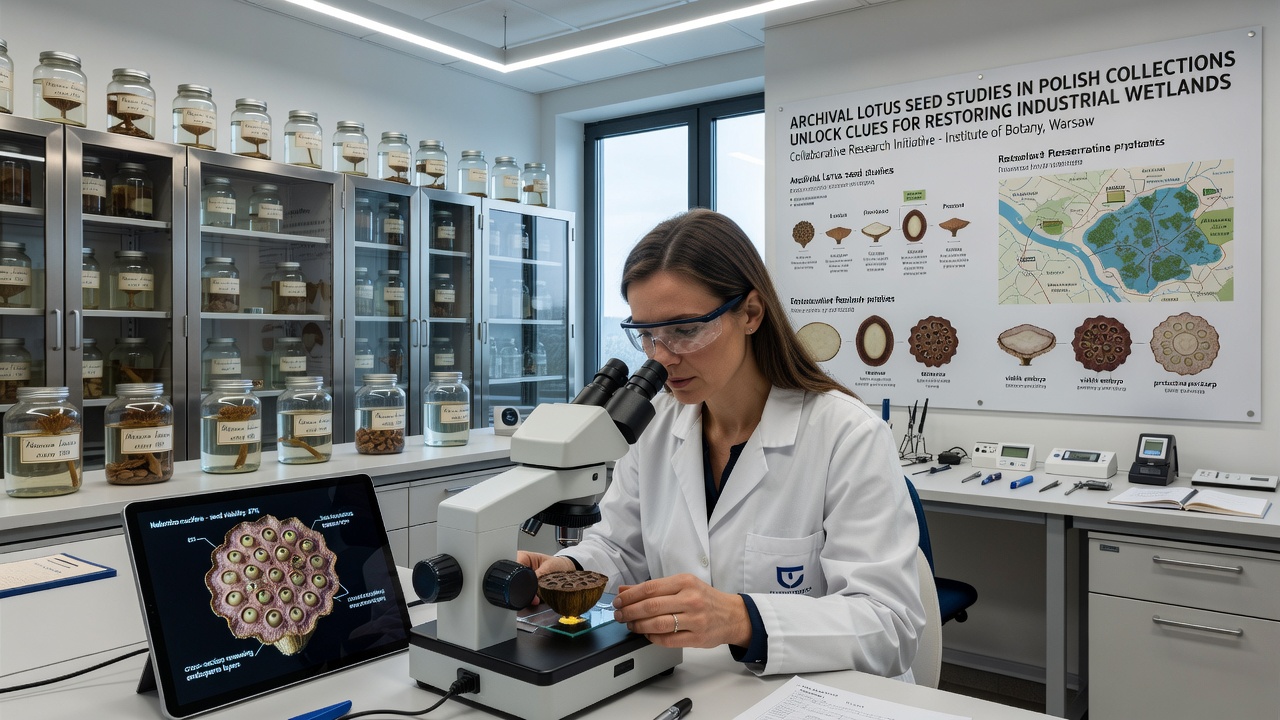
Genetic analysis of the stored seeds has identified alleles associated with extended dormancy and rapid post-germination growth, characteristics that researchers at the University of Wrocław suggest may prove advantageous in areas experiencing both prolonged droughts and episodic flooding. Collaboration with the US Department of Agriculture's wetland research units has allowed Polish teams to test these same seed lines in greenhouse arrays that simulate Midwestern prairie pothole conditions, and preliminary data show comparable biomass accumulation to local ecotypes when soil pH and metal concentrations are matched. Such exchanges highlight how archived material can supplement native seed supplies that have become limited due to habitat loss.
Integration with Ongoing Industrial Site Rehabilitation
Industrial wetland recovery programs in the European Union increasingly reference Polish seed studies when drafting site-specific management plans, especially for locations where legacy contamination limits the use of commercial nursery stock. A 2024 report from the European Commission documented twenty-seven active restoration sites that now incorporate material traced to Polish collections, noting reduced replanting costs and faster establishment of associated invertebrate communities. Field teams in the Upper Silesian Industrial Region have paired lotus plantings with engineered water-level controls that buffer against both summer heatwaves and winter ice scouring, demonstrating practical application of the archival findings under real-world variability.
Additional trials scheduled to begin after the 2026 growing season will evaluate seed performance in constructed wetlands designed to treat mine drainage, building on earlier success in the Lusatian lignite district where similar approaches stabilized water chemistry within four years. Those who coordinate these projects emphasize that the combination of historical seed genetics and modern engineering allows restoration to proceed even when local propagule sources have been eliminated by decades of industrial activity.
Conclusion
Archival lotus seed research conducted in Polish institutions supplies measurable genetic and physiological data that support wetland restoration across industrial landscapes subject to changing climatic conditions, and ongoing field deployments through 2026 continue to test these materials under expanded environmental ranges. The documented viability, growth responses, and site performance metrics provide concrete reference points for agencies and contractors managing comparable projects elsewhere. Continued cataloguing and testing of existing collections will further refine protocols for selecting and deploying seed material suited to the specific stresses of post-industrial wetlands.